Showing posts with label Jesus Christ. Show all posts

Wednesday, May 7, 2014

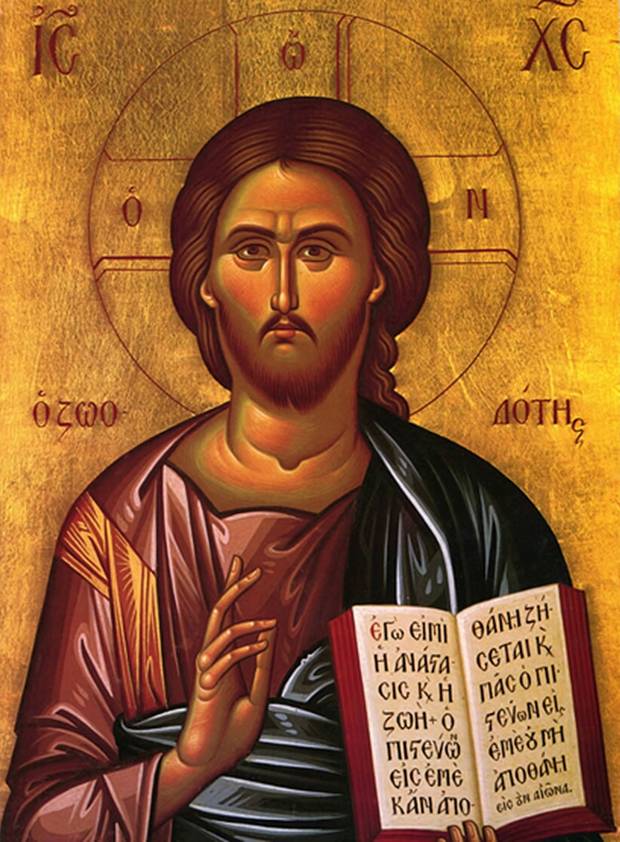
The Holiness of the Name


http://christadelphians.wordpress.com/tag/name-of-god/


"When the priests and the people which stood in the Temple Court heard the Expressed Name come forth from the mouth of the High Priest, they used to kneel and bow themselves and fall down on their faces and say, 'Blessed be the name of the glory of his kingdom for ever and ever!'"--Yoma 6:2

For many cultures throughout the world, a name is a powerful thing.  It was no different for our forefathers in faith, the sons of Israel, for to them had been revealed the Holy Name of God.  His Name was seen to be so powerful that only the high priest could pronounce it, and that only once a year.  The Name was so great and so holy that Jews to this day do not pronounce it when reading the Scriptures, instead only saying "Adonai" (Lord).  For the holiness of God is an immense flood that soaks everything relating to Him, so that from the Ark of the Covenant to the Holy Name, all is imbued with His sanctity.  And this sanctity is of such a power that the one who is unprepared and unworthy is destroyed by it, as was Uzziah when he tried to touch the ark.  (Just so the Eucharist is Holy, and he who partakes of it unworthily eats and drinks condemnation on himself.)

Wednesday, December 28, 2011

Iconic Icons: The Nativity


On December 25, Christians everywhere (and non-Christians as well, to an extent) celebrated the Nativity of Our Lord Jesus Christ.  Being one of the greatest feasts of the Church and one of the greatest events in the history of mankind, icons have been written to celebrate this glorious Birth.  The traditional style of the icon is attributed to the iconographer Andrei Rublev (who wrote the most famous form of the icon of the Trinity).

In the center of the icon is the center of history: Jesus Christ, as a Child, just as He was on the day of His Nativity.  The Son of God, Lord of the Universe, is just a small baby wrapped in swaddling clothes inside a manger (represented by the cave).  Next to Him is His Mother, the Theotokos, Mary, in her traditional coloring of blue robed in red, humanity robed in divinity through her Son's gift and grace.  In the cave with the Virgin and her Son are an ox and ass, representing the fulfillment of the prophecy of Isaiah:

"The ox knoweth his owner, and the ass his master's crib" (Is 1:3).

These two figures and the animals, inside a cave, are the essentials of the Nativity icon.  There are many other details that may be present in the icon, although their presence varies from icon to icon, due to the individual iconographer.  I will explain as many as I can find, though there may be other details in other copies of the icon.

Above the cave (or sometimes in a corner) is a star, the star that led the three Magi to Bethlehem.  Below the cave is a tree, representing the "Jesse Tree" (cf. Is 11).  Sometimes there are midwives, indicating that Christ's Birth was truly a human birth.  St. Joseph is often shown being tempted by an old man (or woman), which represents the devil tempting him with doubts about Christ's divinity and Mary's virginity.  (The copy of this icon that I have instead includes St. Joseph slightly away from the cave, worshipping the Child, with no devil in sight.)  The three Magi are often shown carrying their gifts of myrrh, frankincense, and gold, to Jesus in the cave.  Angels are shown, glorifying God for His great gift of His Son and for the Son's humbling of Himself to become a man.  Sometimes the angels are shown announcing the Good News of the Incarnation to shepherds.  Another figure sometimes includes is a boy sitting in a field, playing a pipe with numerous sheep around him: this symbolizes the joy the whole world experiences with the Incarnation of the Lord.

The many figures and details in this icon can have more symbolic interpretations, such as the cave representing Earth and its darkness representing the world's slavery to sin, which Jesus, the Light of the World, came to save us from.  Mary's posture, which is often reclining, looking concernedly towards St. Joseph, shows her trying to free her spouse from his doubts and temptations regarding the Incarnation.  In some copies of the icon, Mary is shown kneeling before her Son (as in my copy): I interpret this as worship of her Lord, though some say she still looks concerned about others' faith in the Incarnation.

All in all, the icon of the Nativity is very detailed (like those of many, if not most, feasts of the Church), and the amount of detail varies from copy to copy.  Despite all the many details, the icon's goal is to portray one key event: the Incarnation of the Son of God, His taking flesh in order to save us from sin and bring us to everlasting life.  As the Christmas Season, especially the Octave of Christmas, continues, let us continued to meditate on this glorious event, and let us continually thank the Lord for His most glorious salvation.

Lord Jesus Christ, Son of God Incarnate, have mercy on us!
Theotokos, Ever-Virgin Mary, Mother of the Word Incarnate, save us!


[Due to the large variety of differences in this icon, below is a small gallery of various copies of it.]

The copy attributed to Andrei Rublev


Similar to the copy I own
 
Ethiopian icon

Coptic icon

Icon from St. Catherine's Monastery on Mount Sinai


Nota Bene: The information for this post comes primarily from Orthodox Wiki and a page of the website of the Antiochian Orthodox Archdiocese of North America.  The Scripture quote comes from the Douay-Rheims translation.
 

Text ©2011 Brandon P. Otto.  Licensed via CC BY-NC.  Feel free to redistribute non-commercially, as long as credit is given to the author.


Sunday, September 18, 2011

Iconic Icons: Pantocrator


In two previous posts (here and here), I discussed the theology behind icons. Now I'm going to begin a series on some famous icons and types of icons that will be entitled Iconic Icons (yes, the pun is very much intended).

The first icon I'll cover is the basic icon: the Pantocrator (Παντοκρατωρ), which can be translated either "Almighty" or "Ruler of All." It is the icon of He who is the core of the Christian faith: Jesus Christ Himself. During the iconoclastic period of the 8th and 9th centuries (roughly), the main thing attacked was the icon of Christ. Of course, icons of the Theotokos and the saints were also attacked, but when reading the main defenses of icons, it seems like they focus most on defending icons of Christ, and then they use those arguments (expanded) to argue for icons of Theotokos and the saints. (For a good review of the debate over the icon of Christ, see Cardinal Cristoph Schönborn's book God's Human Face: The Christ-Icon.)

Due to the attacks of the iconoclasts, many of the early icons of the Church were lost. Most of the earliest icons still remaining are from Saint Catherine's Monastery on Mount Sinai. Accordingly, the oldest known Pantocrator is found there (pictured below).


This icon portrays astoundingly one of the key aspects of the Pantocrator. Obviously, it is an icon of Christ, and so it depicts Him, usually from the waist up, traditionally with one hand making the sign of blessing (forming the letters ICXC, which stand for the first and last letters of "Jesus" and "Christ" in Greek -- Ιεσους Χριστος) and one hand holding the Book of the Gospels, sometimes open to a verse. These two hands are supposed to represent mercy and judgment, splitting the icon down the middle into two attributes of Christ (the split into two also represents the two natures joined in Christ).

The icon at Saint Catherine's Monastery showcases this split even better. Instead of just the hands representing the two attributes, even Christ's face does. The right eye (the eye above the sign of blessing) is an eye with a merciful gaze, and the left eye (above the Book of the Gospels) is a judgment eye gazing sharply. With this Pantocrator, one is able to cover one side of the Lord's face and see His judgmental stare, and he can see His merciful gaze when the other side is covered.

That is the key to what makes the Pantocrator such a unique icon of Christ: its depiction of the two attributes of mercy and judgment, representing the two natures of Christ. Its use is so ubiquitous that almost all Eastern chapels or churches have a Pantocrator written on their top domes (I even heard once that it was a requirement, though I am not certain of that).

In conclusion, the Pantocrator is the basic icon, and it is most likely the most well-known and recognizable icon (it even appears on the cover of Ignatius Press' popular Catholic Edition of the RSV translation of the Bible). It is extremely unlikely to find any collection of icons that does not include the Pantocrator (after all, why would you have icons to represent Mary and the saints, yet none to represent Jesus Christ, the Son of God Incarnate, the Saviour of mankind?). So, if you decide to begin a collectionf of icons to aid you in prayer, begin by acquiring a Pantocrator.

I hope you found this post helpful, and I hope you enjoy this series.

Christ the King, have mercy on us!


Nota Bene: Some information was taken from Wikipedia, particularly the page on the Pantocrator (and also a bit from the page on Saint Catherine's Monastery).


Text ©2011 Brandon P. Otto.  Licensed via CC BY-NC.  Feel free to redistribute non-commercially, as long as credit is given to the author.